
Every year, families in Florida walk into hospitals trusting that their loved ones will receive competent, careful care. Sometimes, that trust is broken in the most permanent way possible. A missed diagnosis. A surgical mistake. A medication error that goes unchecked. What begins as a routine medical visit ends as a tragedy, and the family is left not only grieving but searching for answers that the healthcare system rarely volunteers.
If you believe a loved one’s death was caused by a medical provider’s negligence, speaking with a wrongful death attorney in Pensacola is the most important step you can take. This guide by our team at Lusko Law walks through the medical errors most likely to support a claim, what Florida law requires, and what your family can realistically expect from the legal process.
Florida’s Medical Malpractice Problem Is Bigger Than Most Realize
Florida is not an outlier when it comes to medical negligence. It is one of the most affected states in the country.
At the national level, the picture is equally stark. Researchers at Johns Hopkins School of Medicinefound that medical errors contribute to an estimated 250,000 deaths in the United States annually, placing medical negligence among the leading causes of preventable death in the country, trailing only heart disease and cancer.
These are not rare accidents. They are systemic failures that affect real people and real families. For those in Pensacola who have lost someone under these circumstances, the question is not just what happened. It is who is responsible, and what can be done about it.
The Legal Line Between a Bad Outcome and a Wrongful Death Claim
Florida’s Wrongful Death Act, codified across Sections 768.16 through 768.26 of the Florida Statutes, provides a legal pathway for surviving family members when a loved one dies due to another party’s negligence. In a medical context, that means establishing three things: a provider-patient relationship existed, the provider deviated from the accepted standard of care, and that deviation directly caused the death.
That third element, causation, is where many wrongful death claims are won or lost. A provider may have clearly made an error, but unless that error can be connected to the death through qualified specialist testimony, a case may not survive. Working with experienced lawyers for wrongful death claims at Lusko Law from the very start of the process makes a measurable difference in outcomes.
Florida’s “Free Kill” Statute: A Reality Families Must Understand
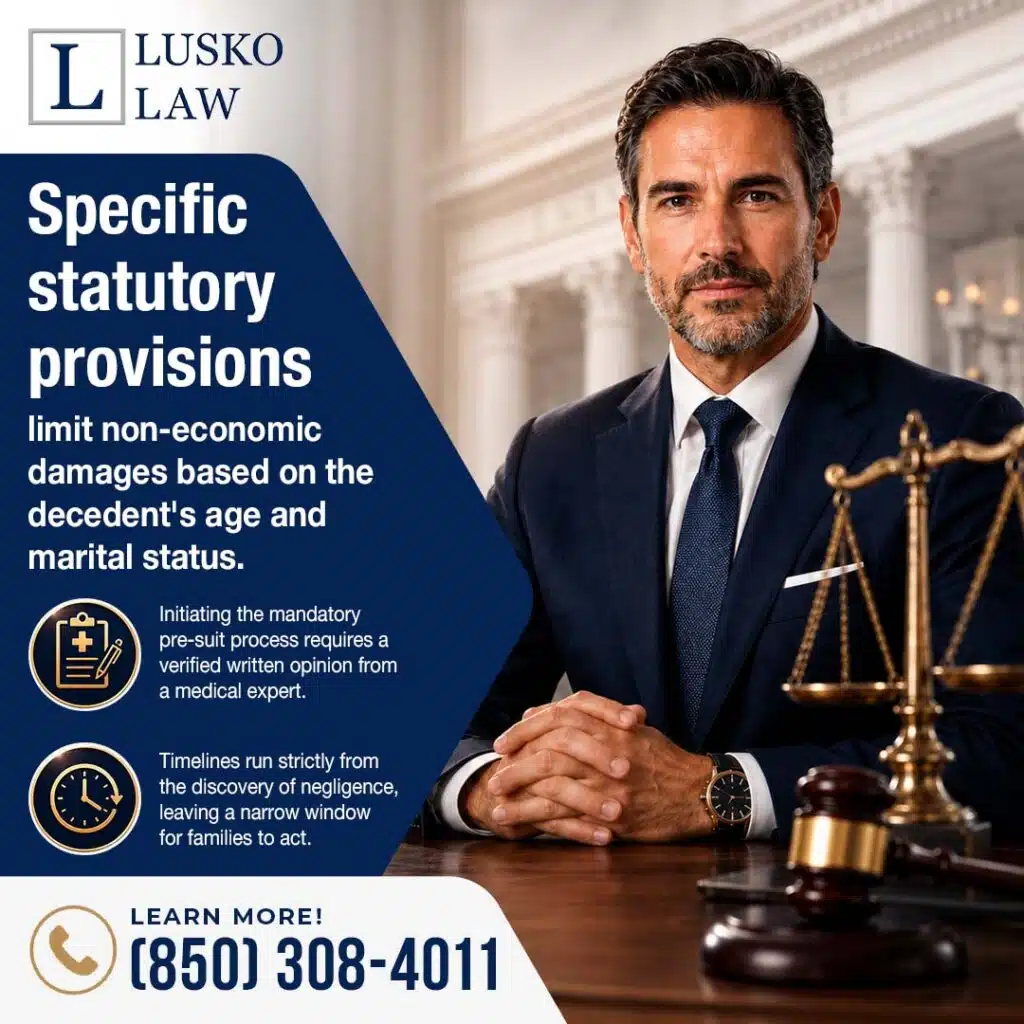
Florida has a law that comes as a shock to many families when they first encounter it. Under Florida Statute Section 768.21, adults over 25 who are unmarried and without minor children have severely restricted rights to pain and suffering damages when they die due to medical malpractice. Parents cannot sue for emotional loss. Unmarried partners cannot claim grief damages. Critics across the legal community have called this the “free kill” provision, and it remains Florida law today despite legislative efforts to reform it.
This is not a reason to give up. It is a reason to speak with a wrongful death lawyer who knows precisely which damages your family can and cannot pursue, so that nothing available to you is left on the table.
The Medical Errors That Most Commonly Support a Wrongful Death Lawsuit
Not every poor medical outcome is legally actionable. But certain error categories appear repeatedly in wrongful death litigation, and they share a common thread: they were preventable.
Failure to Diagnose or Misdiagnosis
Misdiagnosis is the single most common basis for medical malpractice claims nationwide, accounting for nearly one-third of all successful cases. A patient presents with clear symptoms.
The provider fails to order the right tests, misinterprets the results, or dismisses warning signs as something minor. Days or weeks later, the condition, whether cancer, a pulmonary embolism, or a heart attack in progress, has advanced beyond the point where treatment could have made a difference.
Time is a clinical resource. When a provider fails to use it correctly, the consequences can be irreversible.
Surgical Errors and Post-Operative Negligence
Wrong-site operations, uncontrolled intraoperative bleeding, perforated organs, and failures to monitor a patient’s recovery are all documented causes of preventable surgical death.
Medication Errors
The wrong drug. The wrong dose. A dangerous interaction that no one flagged. Medication errors are disturbingly common across hospital and outpatient settings, and they disproportionately affect patients managing complex conditions or multiple prescriptions.
Emergency Room Failures
Emergency departments operate under intense pressure, and under that pressure, diagnostic errors happen more often than hospitals acknowledge. A patient with chest pain is told it is anxiety and sent home. A stroke patient is told to rest and follow up in a few days.
By the time the error is recognized, the intervention window has closed. These are among the most emotionally difficult cases we handle, because the family often knew something was wrong before the hospital did.
Long-Term Care and Nursing Facility Negligence
Elderly residents in long-term care facilities are especially vulnerable to negligence that escalates into fatal harm. Untreated bedsores, preventable falls, infections that spread due to understaffing, and failures to respond to documented declines in a resident’s condition can all turn a manageable situation into a fatal one.
When a facility’s systemic failures cause a resident’s death, surviving family members may have grounds to file a wrongful death lawsuit against the facility, its management, or both.
What Damages Can a Family Actually Recover?
Florida’s Wrongful Death Act allows surviving family members to pursue compensation based on their relationship to the deceased. Spouses and minor children generally hold the broadest rights. Parents of adult children face meaningful restrictions under the statute, which is another reason that early, specific legal guidance is not optional.
Recoverable damages may include:
- Medical expenses incurred between the negligent act and the time of death
Funeral and burial costs - Lost income and financial support the deceased would have provided
- Loss of companionship, guidance, and parental care
- Mental anguish experienced by eligible surviving family members
These cases require substantial evidentiary work, including medical records, expert witness opinions, and deposition testimony. The families who contact our wrongful death attorneys at Lusko Law promptly give their legal team the best chance of preserving critical evidence before it becomes harder to access.
What Happens If You Wait
Florida’s pre-suit requirements for wrongful death claims rooted in medical malpractice are among the most procedurally demanding in the country. Before filing suit, a claimant must serve advance written notice on each defendant, conduct a pre-suit investigation, and obtain a verified specialist opinion supporting the negligence claim.
These steps must be completed correctly and within the applicable statute of limitations. The clock runs from the date of death or the date the family discovered, or should have discovered, the negligent act.
Grief does not pause that clock.
At Lusko Law, we begin building the case from the first consultation. We review medical records, identify the right expert witnesses, and ensure every procedural requirement is met before a single filing is made. Attorney Justin Lusko spent years as an Assistant State Attorney, trying more than fifty-five jury trials before dedicating the last decade to medical malpractice and wrongful death representation. When a case cannot be settled, he takes it to trial.
Your Family Deserves Answers. We’re Here to Help.
Losing someone to a preventable medical error is devastating. The legal process that follows should not add to that burden. As experienced wrongful death attorneys in Pensacola, we are here to guide your family through every step with clarity, care, and honest counsel about what your case can and cannot achieve.
If you are ready to talk, call Lusko Law at (850) 308-4011 or email info@luskolaw.com to schedule a confidential, no-cost consultation. Virtual appointments are available. You do not have to figure this out alone.