Social Media Addiction Litigation
Social Media Addiction Litigation
Holding Big Tech Accountable for Youth Mental Health Harm
The social media addiction litigation represents one of the most consequential mass tort developments of the 2020s. Thousands of families, school districts, and municipalities across the United States have filed lawsuits against major technology companies — including Meta (Facebook, Instagram), ByteDance (TikTok), Snap (Snapchat), Alphabet (YouTube and Google), and others — alleging that these companies deliberately engineered their platforms to create addictive behaviors in young users while knowingly concealing the resulting mental health harms.
As of April 2026, over 2,000 lawsuits are pending in a federal multidistrict litigation (MDL No. 3047) in the Northern District of California. The landscape shifted decisively in March 2026 when a Los Angeles jury issued the first-ever plaintiff verdict, finding Meta and YouTube liable for negligent design and awarding $6 million in total damages — including $4 million in punitive damages. A separate New Mexico jury simultaneously ordered Meta to pay $375 million for consumer protection violations. These verdicts signal a turning point in how courts and juries view the accountability of social media companies for the products they design and deploy.

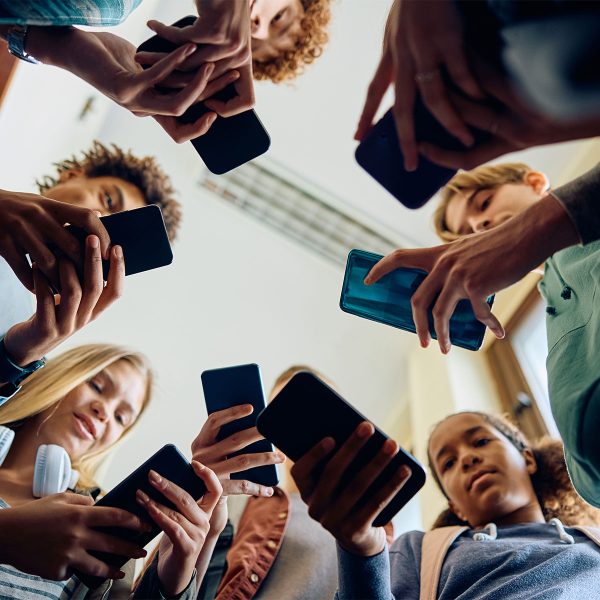
American teenagers are experiencing a mental health crisis of historic proportions. Rates of depression, anxiety, eating disorders, self-harm, and suicidal ideation have surged over the past decade — a period that coincides precisely with the mass adoption of social media platforms among adolescents.
Central to this litigation is the allegation that social media companies did not create addictive products incidentally — they engineered addiction deliberately. The lawsuits focus on specific design features, including:
- Infinite scroll, which removes natural stopping points and encourages endless browsing
- Algorithmic content feeds that prioritize engagement over accuracy or safety, exploiting psychological vulnerabilities
- Push notifications and alerts tied to social validation signals (likes, comments, mentions) that trigger dopamine release
- Auto-play features on video platforms that reduce friction for continued viewing
- Recommendation systems that have been documented to push self-harm, eating disorder, and suicide-related content to at-risk youth
Research cited in the litigation shows that social media addiction can produce neurological changes similar to those seen in substance addiction. The constant pursuit of social validation — likes, shares, and followers — reinforces compulsive behavior, worsens mood in the absence
of engagement, and creates a dependency cycle that is especially powerful in the still-developing adolescent brain.
The Federal Multidistrict Litigation (MDL No. 3047)
In early 2023, the U.S. Judicial Panel on Multidistrict Litigation consolidated hundreds of social media addiction lawsuits into MDL No. 3047, assigned to U.S. District Judge Yvonne Gonzalez Rogers in the Northern District of California. The MDL covers personal injury claims brought by individuals and families alongside cases filed by school districts and municipalities. As of April 2026, over 2,465 claims are pending in this MDL — a number that has grown steadily each month.
The federal MDL focuses on platform design and architecture rather than user-generated content, a distinction that has proven legally critical. Courts have consistently allowed design-based claims to proceed, rejecting early defense motions to dismiss grounded in Section 230 of the Communications Decency Act. In November 2023, Judge Gonzalez Rogers denied the defendants’ motion to dismiss, ruling against Alphabet (Google/YouTube), Meta (Facebook/Instagram), ByteDance (TikTok), and Snap. In October 2024, she upheld key school district claims, finding it plausible that defendants’ conduct contributed to worsening student mental health and imposing measurable costs on educational institutions.
Key Litigation Milestones (2023–2026)
| Date | Development |
|---|---|
| Early 2023 | JPML consolidated hundreds of lawsuits into MDL No. 3047 in the Northern District of California, assigned to Judge Yvonne Gonzalez Rogers. |
| Nov. 2023 | Judge Gonzalez Rogers denies defendants' motion to dismiss, ruling design-based claims can proceed and rejecting Section 230 immunity arguments. |
| Oct. 2024 | Court upholds key school district claims, finding plaintiffs plausibly linked defendants' conduct to measurable increases in student mental health costs. |
| Nov. 2024 | First bellwether personal injury trial scheduled for November 25, 2025; more than 2,000 lawsuits now pending in the MDL. |
| Jan. 2026 | TikTok and Snap settle individual claims in California state court immediately before jury selection, avoiding trial exposure; broader MDL claims continue. |
| Jan. 2026 | Opening statements in K.G.M. v. Meta Platforms and Alphabet — the first personal injury trial in the MDL — commence in Los Angeles Superior Court. |
| Feb. 2026 | Instagram CEO Adam Mosseri testifies about platform design choices; Mark Zuckerberg takes the stand in a landmark moment for tech accountability litigation. |
| Mar. 25, 2026 | Los Angeles jury finds Meta and YouTube liable on all counts in K.G.M., awarding $6 million total. New Mexico jury simultaneously awards $375 million against Meta. |
Plaintiff Eligibility: Who Can Bring a Claim
- Began using social media platforms (Facebook, Instagram, TikTok, Snapchat, YouTube, or similar) before the age of 18
- Used the platform(s) for more than three hours per day on a regular basis
- Developed a documented diagnosis or received treatment for depression, anxiety, body dysmorphia, an eating disorder, self-harm behavior, or suicidal ideation or attempts
- Can demonstrate that the mental health condition arose or worsened during the period of heavy platform use